
On the 19 December 2011 the 66th United Nations General Assembly adopted resolution 66/130 regarding women and political participation. The resolution encourages all states to achieve:
“equal representation of women and men, if necessary through positive action, in all governmental and public administration positions”
In 2015, the United Nations Sustainable Development Goal 5 of The Sustainable Development Goals of Agenda 2030 further addressed women’s political participation via a specific target (5.5):
“Ensure women’s full and effective participation and equal opportunities for leadership at all levels of decision-making in political, economic and public life”
with two indicators
– 5.5.1: Proportion of seats held by women in (a) national parliaments and (b) local governments
– 5.5.2: Proportion of women in managerial positions
UN Women support this SDG and have a strategic objective to enable women to lead, participate in and benefit equally from governance systems.
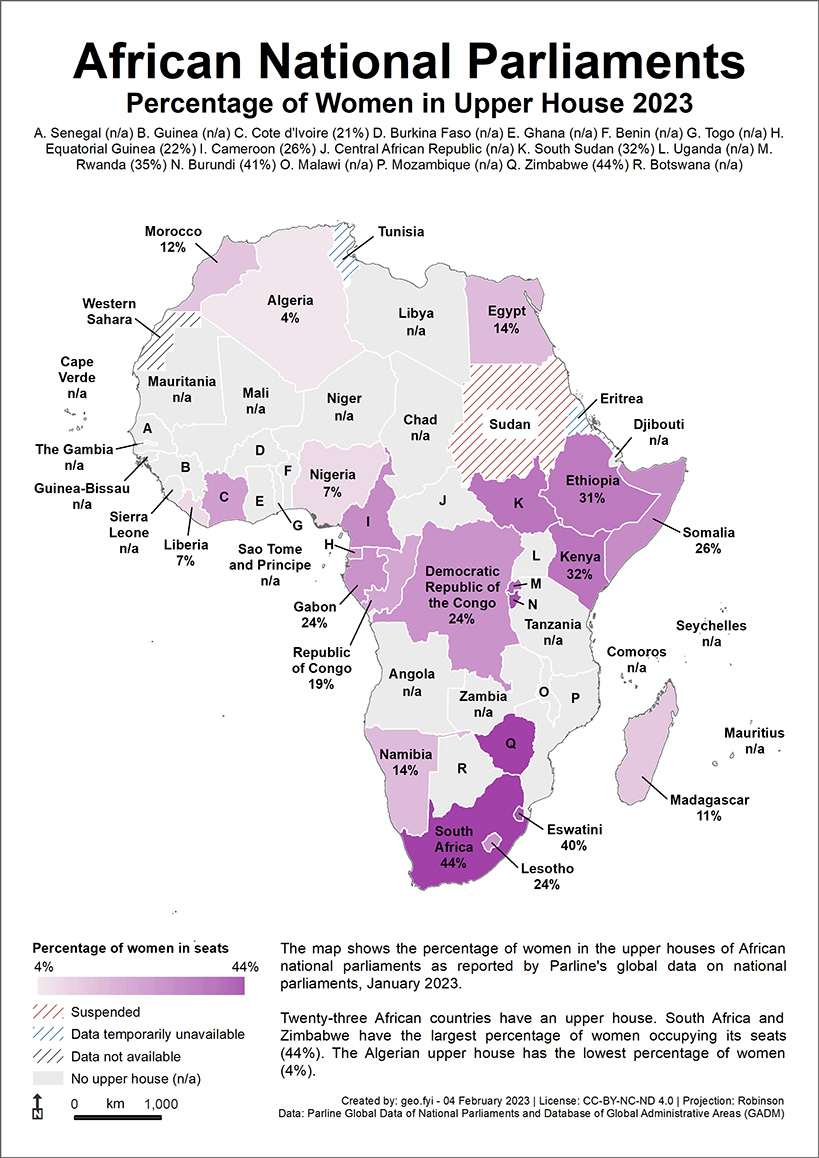
This post looks at the current political representation of women within African national parliaments using the Parline Global Data of National Parliaments.
Women Speakers of African national parliaments
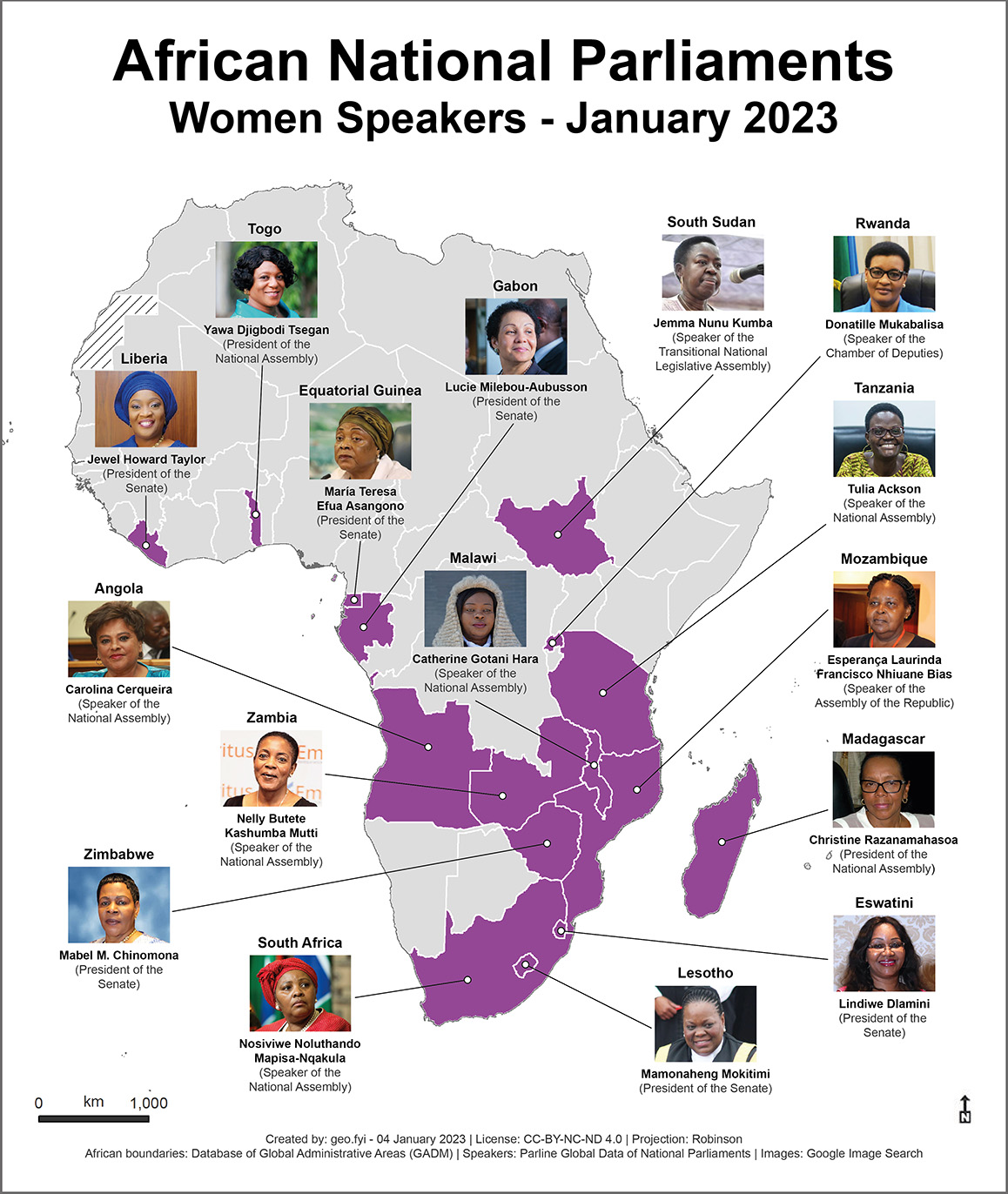
Women’s participation in African houses of national parliaments

Women heads of African states and parliaments
At the time of publishing in February 2023, there are five women as heads of African states and parliaments.
– Sahle-Work Zewde (President of Ethiopia)
– Victoire Tomegah Dogbé (Prime Minster of Togo)
– Samia Suluhu Hassan (President of Tanzania)
– Najla Bouden (Prime Minister of Tunisia)
– Manuela Roka Botey (Prime Minister of Equatorial Guinea)
 geo.fyi